
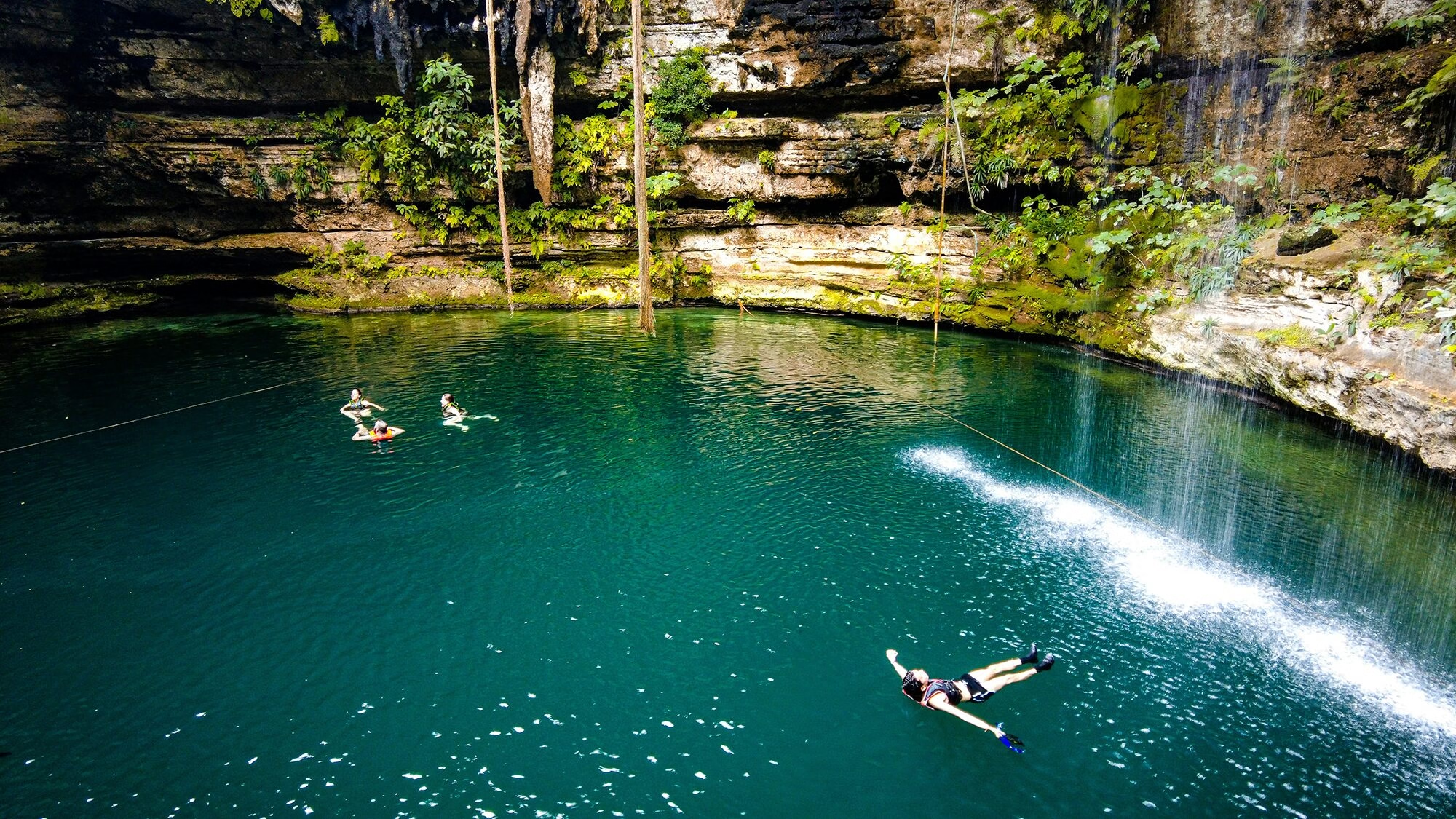
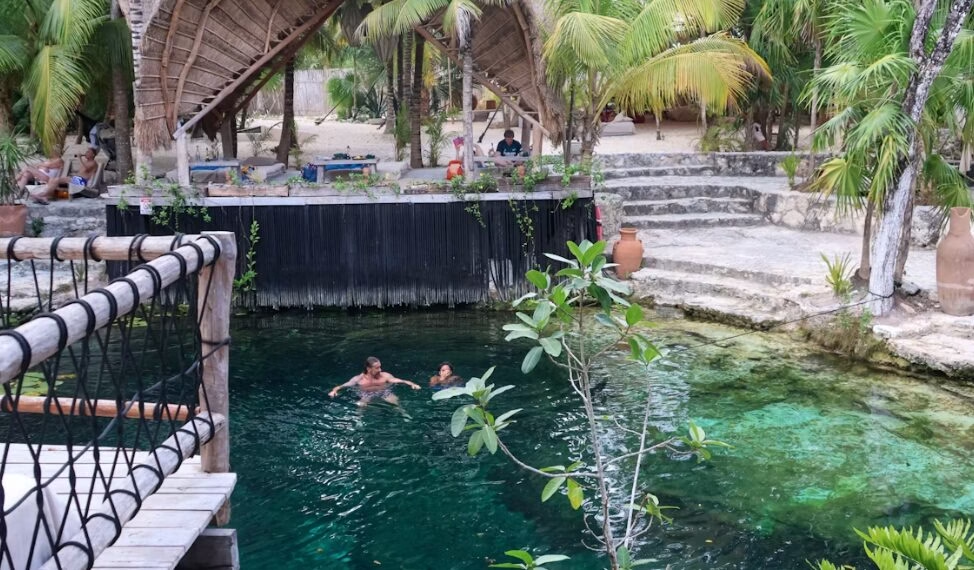
If you are visiting Tulum for the first time, swimming in a cenote should be near the top of your itinerary.
Hidden beneath the jungles of the Riviera Maya is an extraordinary underground world of freshwater pools, limestone caves, underground rivers and natural swimming holes. Some cenotes are open to the sky and surrounded by jungle, while others lead into enormous cave systems where sunlight filters through openings in the limestone.
But choosing a cenote isn’t always easy.
There are dozens of cenotes within reasonable driving distance of Tulum, and they are not all the same. Some are best for families and first-time swimmers. Others are better suited to snorkeling, photography, cliff jumping or certified cave diving. Some are highly developed with restaurants, lockers and changing facilities, while others offer a much more rustic experience.
This guide from OnlyTulum.com breaks down the best cenotes near Tulum so you can choose the experience that fits your vacation.
Quick answer: For most first-time visitors, Gran Cenote is an excellent introduction to the cenote experience; Dos Ojos is one of the strongest choices for cave snorkeling and diving; Casa Cenote is unique for its open mangrove environment and connection to the underground water system; Cenote Calavera is convenient for travelers staying in Tulum; and Cristal & Escondido offer a more relaxed two-cenote experience close to town.
Quick Answer: What Are the Best Cenotes in Tulum?
| Cenote | Best For | Approx. Location From Tulum | Experience |
|---|---|---|---|
| Gran Cenote | First-time visitors, snorkeling, families | About 10 minutes west of central Tulum | Open + cavern |
| Dos Ojos | Cave snorkeling, diving, adventure | About 20–30 minutes north | Cave system |
| Casa Cenote | Snorkeling, nature, families | North of Tulum toward Tankah | Open mangrove cenote |
| Cenote Calavera | Photography, swimming, adventure | Close to Tulum Pueblo | Open cenote |
| Cristal & Escondido | Swimming, snorkeling, value | South of Tulum | Open cenotes |
| Cenote Car Wash | Swimming, snorkeling, diving | Road toward Cobá | Open cenote |
| Cenote Zacil-Ha | Families, swimming, facilities | Road toward Cobá | Open cenote |
| Jardín del Edén | Swimming, snorkeling, nature | North of Tulum | Large open cenote |
| Nicte-Ha | Quiet swimming, photography | Dos Ojos area | Open/semi-open |
| Taak Bi-Ha | Cave experience, snorkeling, diving | Dos Ojos area | Cavern |
Distances and travel times are approximate because they depend on your starting point, traffic and the exact entrance you use. Always verify current admission prices, hours and access conditions before leaving.
What Is a Cenote?
A cenote is a natural sinkhole, pool or cavern formed in the limestone landscape of the Yucatán Peninsula. Rainwater filters through the porous limestone and feeds an extensive underground aquifer and cave system.
The word cenote comes from the Maya term dz’onot, referring to a water-filled cavity.
Cenotes are particularly important around Tulum because the region sits above an interconnected network of underground rivers and caves. Mexico’s National Commission of Natural Protected Areas, CONANP, notes that the Tulum area contains cenotes and underground rivers that connect with the region’s hydrological system.
Cenotes can generally be experienced as:
Open Cenotes
These have large openings to the sky and often resemble natural jungle swimming pools.
Good for: swimming, families, photography and relaxing.
Semi-Open Cenotes
These combine an open swimming area with partially covered caves.
Good for: snorkeling, swimming and exploring.
Cave or Cavern Cenotes
These are dominated by underground chambers, stalactites, stalagmites and passages.
Good for: adventure, guided snorkeling and diving.
Underground Cave Systems
Some cenotes are connected to extensive underwater cave systems.
Good for: experienced and properly certified cave divers with qualified guides.
1. Gran Cenote — Best Overall for First-Time Visitors
Gran Cenote is one of the most recognizable cenotes near Tulum and remains one of the easiest recommendations for a first-time visitor.
Located along the road toward Cobá, it combines an open-air swimming area with cave sections and exceptionally clear water. Visitors can swim, snorkel and explore the cave environment.
Tripadvisor currently lists Gran Cenote among Tulum’s attractions and describes it as an open-air cenote surrounded by caves, with swimming, snorkeling and diving opportunities.
Why Visit Gran Cenote?
- Easy introduction to cenotes
- Clear freshwater
- Open and cavern environments
- Snorkeling opportunities
- Fish and turtles may be visible
- Photogenic jungle surroundings
- Convenient location from Tulum
Best For
First-time visitors, families, couples, photographers and snorkelers.
How Long Should You Spend?
Plan approximately 1.5 to 2.5 hours, depending on whether you swim, snorkel and explore the cave areas.
Insider Tip
Gran Cenote is popular. If you want a quieter experience, consider arriving earlier in the day rather than during the busiest periods.
Also, don’t assume that the most famous cenote automatically represents the best value. Current traveler feedback frequently mentions the relatively high admission price compared with smaller cenotes.
2. Cenote Dos Ojos — Best for Cave Snorkeling and Diving
Cenote Dos Ojos is one of the most famous cenote experiences in the Tulum area.
The name means “Two Eyes,” referring to two large openings connected through the underground cave system.
Dos Ojos is particularly appealing to travelers who want to experience the subterranean side of the Riviera Maya.
The official Dos Ojos Park currently lists multiple cenotes and experiences within the park, including Dos Ojos, Jaguar, Nicte-Ha, Misterio Maya, Monos and El Pit. It also states that diving services require certification.
Why Visit Dos Ojos?
- Famous cave system
- Excellent snorkeling opportunities
- Diving
- Multiple cenotes within the park
- Dramatic underwater rock formations
- Options for different levels of adventure
Lonely Planet also identifies Dos Ojos as one of the strongest cenotes around Tulum for diving and snorkeling.
Best For
Adventure travelers, snorkelers, divers and travelers interested in caves.
Important First-Time Visitor Tip
Dos Ojos is not simply one small cenote with one admission experience. It is a larger park containing multiple cenotes and experiences.
The official park currently allows visitors to select individual cenotes and services when booking.
Diving
Cave and cavern diving should not be treated like ordinary recreational swimming.
Use a qualified local dive operator and follow certification and guide requirements. The official Dos Ojos site specifically notes that diving services require certification.
3. Casa Cenote — Best for Nature and an Open Mangrove Setting
Casa Cenote offers something different from the classic enclosed cave experience.
Located north of Tulum in the Tankah area, this cenote has an open, lagoon-like environment surrounded by mangroves.
Its location also makes it interesting for visitors who want to understand the relationship between cenotes, underground waterways and the Caribbean.
The property’s official website describes Casa Cenote as being in Tankah Tres and directly beside a cenote connected with an underground cave system.
Why Visit?
- Open-air environment
- Mangrove surroundings
- Swimming
- Snorkeling
- Diving
- Distinctive scenery
- Different atmosphere from cave cenotes
Best For
Nature lovers, photographers, snorkelers, couples and adventurous families.
Insider Tip
Casa Cenote is particularly worthwhile if you want a cenote experience that feels more like exploring a natural waterway than swimming in a traditional sinkhole.
4. Cenote Calavera — Best for Convenience and Photography
Cenote Calavera is one of the easiest cenotes to consider if you are staying in Tulum and don’t want to dedicate an entire day to transportation.
Its unusual openings give the cenote its nickname, “Skull Cenote.”
The cenote is known for its clear water, rocky surroundings and dramatic entry points. Travel + Leisure identifies it as one of the cenotes near Tulum and notes that it is approximately two miles from Tulum.
Best For
- Photography
- Swimming
- Adventure
- Couples
- Travelers with limited time
What Makes It Different?
Instead of arriving at a large developed attraction, you get a more intimate cenote environment.
Insider Tip
If you are staying in central Tulum, Calavera can make sense as a short morning or afternoon excursion rather than a full-day adventure.
5. Cenote Cristal & Cenote Escondido — Best Two-Cenote Experience
Cristal and Escondido are twin cenotes located south of Tulum.
One of their biggest advantages is that visitors can experience two different cenotes in a single outing.
Travel + Leisure describes both as less than three miles south of Tulum, with swimming, snorkeling and diving opportunities.
Cenote Cristal
Cristal is an open-air cenote surrounded by vegetation and offers platforms and swimming opportunities.
Cenote Escondido
Escondido offers a more natural jungle setting and is known for its rope swing.
Best For
Budget-conscious travelers, couples, swimmers and travelers who want to visit more than one cenote.
Insider Tip
If you have limited time in Tulum, visiting two nearby cenotes can be more efficient than spending most of your day traveling to a single attraction.
6. Cenote Car Wash — Best for a More Laid-Back Experience
Cenote Car Wash, also known as Aktun-Ha, is located along the road toward Cobá.
Its name comes from the area’s former use as a place where taxis and vehicles were washed.
Today, the cenote is known for its open-water environment, vegetation and underwater features.
Travel + Leisure highlights Car Wash for its rope swing, diving platform and underwater rock formations.
Best For
Swimmers, snorkelers, divers and travelers looking for a less polished experience.
Insider Tip
Car Wash is a good option if you want to experience a cenote without the same “bucket-list attraction” feel associated with some of the larger names.
7. Cenote Zacil-Ha — Best for Families and Facilities
Cenote Zacil-Ha is a smaller open cenote with exceptionally clear water and facilities designed for visitors.
Travel + Leisure describes it as approximately 15 minutes from Tulum and notes amenities including a restaurant, changing rooms, restrooms, picnic areas and a short zipline.
Best For
Families, casual swimmers and travelers who want more facilities.
Why Families May Prefer It
Not every cenote is equally convenient when traveling with children.
Facilities such as bathrooms, changing areas and places to sit can make a major difference.
8. Jardín del Edén — Best Open-Air Cenote
Jardín del Edén translates to “Garden of Eden,” and its setting lives up to the name.
It is an expansive open-air cenote surrounded by jungle and natural vegetation.
Travel + Leisure highlights its clear water, underwater rock formations, marine life, diving platform and snorkeling opportunities.
Best For
- Swimming
- Snorkeling
- Nature
- Photography
- Travelers wanting an open-air cenote
Insider Tip
Open-air cenotes are particularly appealing if you want sunlight, jungle scenery and a more traditional swimming-hole experience rather than an underground cave.
9. Nicte-Ha — Best for a Peaceful Cenote Experience
Nicte-Ha is part of the Dos Ojos area and provides a different experience from the dramatic cave environments that make Dos Ojos famous.
The official Dos Ojos Park currently includes Nicte-Ha among its cenote options.
Best For
Nature lovers, photographers, couples and travelers looking for a calmer experience.
Its open, natural setting makes it a useful alternative for travelers who want to experience the Dos Ojos area without making their entire visit about cave exploration.
10. Taak Bi-Ha — Best for a Cave-Cenote Experience
Taak Bi-Ha is another option for travelers specifically interested in underground cenote environments.
Rather than choosing a cenote simply because it looks beautiful in Instagram photographs, travelers interested in cavern experiences should consider whether they are comfortable in enclosed spaces and whether a guided experience is appropriate.
Best For
Adventure travelers, cave enthusiasts, snorkelers and experienced visitors.
Important
Cave environments require additional care. Follow guide instructions and never enter restricted areas or underwater cave systems without the appropriate training and qualified guide.
Best Cenotes in Tulum by Traveler Type
Choosing the “best” cenote depends on what you want from the experience.
Best Cenote for First-Time Visitors
Gran Cenote
It offers an easy introduction to the combination of open water and cave environments.
Best Cenote for Snorkeling
Dos Ojos
The clear water and cave environment make it one of the area’s most recognizable snorkeling experiences.
Best Cenote for Diving
Dos Ojos
The cave system makes it particularly attractive to qualified divers.
Best Cenote for Families
Gran Cenote or Zacil-Ha
Both provide relatively accessible swimming experiences, although families should always evaluate water depth, swimming ability, available flotation equipment and current site rules.
Best Cenote for Photography
Cenote Calavera or Gran Cenote
Both offer distinctive formations, clear water and dramatic natural surroundings.
Best Open-Air Cenote
Jardín del Edén
Its large open pool and jungle surroundings provide a classic outdoor cenote experience.
Best for Nature Lovers
Casa Cenote
Its mangrove environment makes it noticeably different from many of the inland cenotes.
Best for Adventure
Dos Ojos
Choose this if caves, snorkeling, diving and exploration are central to your idea of a cenote adventure.
Best for a Short Excursion
Cenote Calavera
Its proximity to Tulum makes it practical when you don’t want to spend half a day in transit.
Best Two-Cenote Combination
Cristal + Escondido
Visiting two nearby cenotes gives you more variety during one outing.
How Far Are Cenotes From Tulum?
One of the biggest mistakes first-time visitors make is assuming that every cenote is just a few minutes outside town.
They aren’t.
Some cenotes are extremely close to Tulum Pueblo, while others require a longer drive north toward Playa del Carmen or west toward Cobá.
The Tulum National Park itself is accessible from Tulum Pueblo, and CONANP identifies automobile, rental car, tour, bicycle and taxi transportation as options for reaching the protected area.
Approximate Planning Guide
Closest to Tulum
- Cenote Calavera
- Gran Cenote
- Cristal
- Escondido
Moderate drive
- Zacil-Ha
- Car Wash
- Casa Cenote
- Jardín del Edén
Longer excursion
- Some Dos Ojos experiences
- More remote cenotes along the Riviera Maya
Always check the exact location before booking transportation.
How to Get to the Cenotes From Tulum
Your transportation choice depends heavily on where you are staying.
Rental Car
A rental car offers the most flexibility.
It is especially useful if you want to visit several cenotes in one day.
Best For
- Families
- Couples
- Groups
- Multiple-cenote itineraries
- Travelers exploring beyond Tulum
Taxi
Taxis are convenient but can become expensive when you are traveling farther from town or visiting multiple cenotes.
Ask about the fare before starting your journey.
Bicycle
Bicycles can work for some of the closest cenotes, but road conditions, heat, traffic and distance should be considered carefully.
Do not assume that a route that looks short on a map will be comfortable by bicycle.
Guided Tour
A guided tour is often the easiest option for first-time visitors who don’t want to navigate transportation, entrance procedures and equipment themselves.
Guides can also be particularly valuable for cave and diving experiences.
How Much Do Tulum Cenotes Cost?
There is no single cenote admission price.
Current prices vary considerably depending on the cenote, facilities, equipment, guided services and whether you are purchasing access to one cenote or a larger park.
Recent 2026 travel sources report entrance prices ranging from roughly MX$150 to MX$500 or more for many popular cenotes, while multi-cenote parks and guided experiences can cost more.
Traveler reports also show that prices can change and that some cenotes charge separately for equipment or expanded experiences.
Important
Do not rely on an old blog post for today’s price.
Before visiting, verify:
- Admission
- Equipment rental
- Parking
- Locker fees
- Guided tours
- Photography fees
- Drone fees
- Minimum food or beverage consumption
- Payment methods
Are Cenotes Safe?
Cenotes can be enjoyed safely when visitors respect the environment, follow posted rules and understand their own swimming abilities.
But “cenotes are safe” should never mean that every cenote has identical conditions.
Water depth, current, slippery rocks, ladders, jumping platforms, cave environments and swimming ability all matter.
Basic Cenote Safety Rules
- Follow posted rules.
- Use required life jackets.
- Do not jump unless jumping is specifically permitted.
- Never dive into unfamiliar water.
- Stay within designated swimming areas.
- Follow guides in cave environments.
- Do not enter restricted caves.
- Do not swim beyond your ability.
- Keep children supervised.
- Avoid consuming alcohol before swimming.
- Never drink untreated cenote water.
Traveler discussions consistently identify life jackets, sunscreen restrictions and swimming ability as common practical concerns.
What About Cenote Water Quality?
This is an important question that deserves a more honest answer than simply saying that cenote water is “crystal clear.”
Clear water does not automatically mean sterile water.
The Yucatán Peninsula’s porous limestone allows surface contaminants to move into underground water systems. Environmental organizations and reporting have raised concerns about contamination of cenotes and groundwater in parts of the region.
There have also been traveler discussions specifically asking about current E. coli levels at individual cenotes near Tulum.
What Should Travelers Do?
Before swimming:
- Check recent information from the cenote operator.
- Look for current local health or water-quality information.
- Follow posted hygiene requirements.
- Shower before entering when required.
- Avoid swallowing the water.
- Don’t visit if you are ill or have open wounds.
- Follow temporary closures or warnings.
OnlyTulum.com should update this section whenever credible local water-quality information changes.
This is an area where an evergreen article should be reviewed regularly rather than left untouched for years.
Can You Wear Sunscreen in a Cenote?
Usually, you should assume that sunscreen and other personal-care products may be prohibited or restricted unless the specific cenote says otherwise.
Many cenotes require visitors to shower before entering the water.
Even products marketed as “reef safe” should not automatically be assumed to be permitted.
The Better Strategy
Wear:
- Rash guard
- Sun-protective clothing
- Hat before entering
- Sunglasses before swimming
- Biodegradable products only when specifically permitted
Always follow the rules of the individual cenote.
What Should You Bring to a Cenote?
For a typical cenote day, pack:
- Swimsuit
- Towel
- Rash guard
- Water shoes if permitted
- Reusable water bottle
- Dry clothes
- Waterproof phone pouch
- Cash and/or payment card
- Small amount of biodegradable personal-care products, if permitted
- Waterproof bag
- Identification if required
Don’t Overpack
Many cenotes have lockers and changing facilities, but not every location provides the same amenities.
Check before you go.
When Is the Best Time to Visit a Cenote?
For popular cenotes, earlier is generally better if your priority is a quieter experience.
Early visits can also provide better conditions for photography before crowds increase.
Traveler reports and travel publications repeatedly mention arriving early at popular cenotes to avoid larger groups.
Morning
Best for:
- Fewer crowds
- Photography
- Cooler temperatures
- First-time visitors
Midday
Best for:
- Sunlight entering open cenotes
- Bright underwater photography
- Travelers combining a cenote with another attraction
Late Afternoon
Potentially quieter at some locations, but always confirm closing times.
The official Dos Ojos Park currently lists a 4:00 PM park closing time, although individual attractions and policies can change.
How Many Cenotes Should You Visit in Tulum?
You don’t need to visit five or ten cenotes to have a great Tulum vacation.
For most first-time visitors, one or two carefully chosen cenotes are enough.
If You Have One Day
Choose one:
Gran Cenote + Tulum Ruins
or
Dos Ojos + another nearby attraction
If You Have Three Days
Consider:
Day 1: Tulum beach + Pueblo
Day 2: Cenote experience + jungle
Day 3: Tulum ruins + beach or another excursion
If You Love Adventure
Build a dedicated cenote day around:
Dos Ojos + another cenote in the same area
This reduces unnecessary driving.
Suggested First-Time Tulum Cenote Itinerary
Option 1: Easy Half-Day
Morning
Gran Cenote
Late morning
Breakfast or lunch
Afternoon
Tulum Pueblo or beach
Best For
First-time visitors who don’t want to spend an entire day swimming.
Option 2: Two-Cenote Day
Morning
Cristal
Late morning
Escondido
Afternoon
Lunch and return to Tulum
Best For
Travelers who want variety without committing to a major tour.
Option 3: Adventure Day
Morning
Dos Ojos
Late morning
Guided snorkeling or diving experience
Afternoon
Another cenote within the same area
Best For
Adventure travelers and experienced snorkelers/divers.
How to Choose the Right Cenote
Don’t choose a cenote simply because it has the most beautiful Instagram photograph.
Instead, ask yourself:
Do I want to swim?
Choose an open-air cenote.
Do I want to snorkel?
Look for clear water, aquatic life and accessible swimming areas.
Do I want to explore caves?
Choose a cavern or cave cenote and consider a guided experience.
Am I traveling with children?
Prioritize easy access, shallow areas where available, flotation equipment and visitor facilities.
Do I want photographs?
Look for distinctive rock formations, jungle scenery and good natural lighting.
Do I hate crowds?
Consider lesser-known cenotes and visit popular locations early.
Do I have limited time?
Choose a cenote close to Tulum.
Do I want to dive?
Choose based on your certification and use a qualified local dive operator.
Common Cenote Mistakes First-Time Visitors Make
1. Choosing Only by Instagram
A beautiful photograph doesn’t tell you:
- How crowded it gets
- How much it costs
- How difficult it is to reach
- Whether swimming is allowed
- Whether you need a guide
2. Forgetting Cash
Some cenotes and local businesses may have limited payment options.
Carry some Mexican pesos.
3. Assuming Every Cenote Has Facilities
Bathrooms, showers, lockers, restaurants and changing areas vary considerably.
4. Wearing Sunscreen Into the Water
Always check the rules first.
5. Underestimating Transportation
A cenote that looks close on Google Maps may require additional time because of road conditions, entrances or parking.
6. Trying to Visit Too Many
Three rushed cenotes are not necessarily better than one great experience.
7. Entering Cave Systems Without Proper Training
Cave diving is specialized technical diving.
Never attempt it independently.
8. Ignoring Environmental Rules
Cenotes are part of an interconnected underground water system.
What happens at the surface can affect the aquifer.
Cenotes and Responsible Tourism
Cenotes are more than swimming attractions.
They are part of the Yucatán Peninsula’s underground hydrological system and have deep cultural significance for Maya communities.
CONANP notes that the cenotes and underground rivers around Tulum are connected to the area’s natural ecosystems and Maya traditions.
The environmental sensitivity of these systems is significant. Reporting has documented concerns about contamination and the vulnerability of underground waterways in the Yucatán Peninsula.
Be a Better Cenote Traveler
- Shower before entering.
- Follow sunscreen rules.
- Don’t touch formations.
- Don’t remove rocks or natural materials.
- Don’t feed wildlife.
- Don’t leave trash.
- Use reusable water bottles.
- Respect local rules.
- Support locally owned operators where possible.
- Stay on designated paths.
- Follow guides.
- Never enter restricted areas.
Your visit should leave the cenote exactly as you found it.
Are Cenotes Worth Visiting in Tulum?
Absolutely.
For first-time visitors, cenotes provide an experience that is fundamentally different from Tulum’s beaches.
The Caribbean gives you the open ocean.
The cenotes give you access to the underground world beneath the Yucatán Peninsula.
That contrast is part of what makes a Tulum vacation special.
You can spend the morning swimming in turquoise Caribbean water and the next day floating beneath limestone formations surrounded by jungle.
For many travelers, that becomes one of the most memorable parts of their trip.
Frequently Asked Questions About Tulum Cenotes
What are the best cenotes in Tulum?
The best cenotes depend on what you want to do. Gran Cenote is one of the strongest choices for first-time visitors, Dos Ojos is especially well known for cave snorkeling and diving, Casa Cenote offers a distinctive open mangrove environment, and Calavera is convenient for travelers staying near Tulum Pueblo.
Which cenote is best for first-time visitors?
Gran Cenote is a strong choice because it combines open water and cave environments and offers swimming and snorkeling opportunities.
How many cenotes are near Tulum?
There are numerous cenotes in and around the Tulum area. CONANP states that 15 cenotes are located within Tulum National Park, while the broader region contains many additional cenotes and interconnected underground waterways.
How much does it cost to visit a cenote in Tulum?
Prices vary by cenote and experience. Current 2026 sources show many popular cenotes costing roughly MX$150–MX$500+ per person, while guided tours, equipment and multi-cenote experiences can cost more. Always verify the current price directly before visiting.
Can you swim in Tulum cenotes?
Yes. Many cenotes around Tulum are open for swimming, although individual locations have their own rules, swimming areas and safety requirements.
Are Tulum cenotes safe?
Cenotes can be enjoyed safely when visitors follow site rules, use required safety equipment and stay within their swimming abilities. Cave diving requires specialized training and qualified guides.
What should I bring to a cenote?
Bring a swimsuit, towel, dry clothes, water, sun-protective clothing, appropriate footwear and a waterproof phone pouch. Check whether the cenote provides lockers, equipment and changing facilities before visiting.
Can you wear sunscreen in a cenote?
Many cenotes prohibit or restrict sunscreen and other personal-care products because of environmental concerns. Always shower before entering when required and follow the rules of the individual cenote.
What is the closest cenote to Tulum?
Several cenotes are very close to Tulum Pueblo, including Cenote Calavera and other cenotes along the road toward Cobá. Exact travel time depends on your starting location.
Which cenotes are best for families?
Gran Cenote and Zacil-Ha can be good family choices because of their accessible swimming environments and visitor facilities. Parents should always check depth, flotation requirements and current site rules.
Which cenotes are best for snorkeling?
Dos Ojos, Gran Cenote and Jardín del Edén are among the better-known options for snorkeling because of their clear water and underwater scenery.
Can you scuba dive in Tulum cenotes?
Yes. Cenote diving is one of the area’s major attractions. However, cave and cavern diving have specific training and safety requirements. The Dos Ojos Park states that diving services require certification.
Do you need to book a cenote tour?
Not always. Some cenotes allow independent visitors, while guided experiences can be useful for snorkeling, cave exploration and diving. Check the individual cenote’s current booking requirements.
What is the best time of day to visit a cenote?
For popular cenotes, mornings are often a good choice if you want fewer crowds. Midday can provide strong sunlight in open cenotes, which can be attractive for photography.
How do you get to cenotes from Tulum?
Depending on the cenote, you can use a rental car, taxi, bicycle or organized tour. CONANP identifies private/rental vehicles, tours, bicycles and taxis among transportation options in the Tulum protected area.
Are cenotes worth visiting in Tulum?
Yes. Cenotes provide a completely different experience from Tulum’s beaches and are one of the most distinctive natural attractions in the Riviera Maya.
Can children swim in cenotes?
Many cenotes welcome families, but conditions vary. Parents should choose locations appropriate for their children’s swimming abilities and follow life-jacket and supervision requirements.
Are cenotes cold?
Cenote water can feel cooler than the Caribbean Sea because many cenotes are supplied by groundwater. The exact temperature and perception vary by cenote and weather conditions.
Can you visit more than one cenote in a day?
Yes. Visiting two nearby cenotes can be a good strategy, especially when the cenotes are located along the same route.
Final Takeaway
The best cenote in Tulum isn’t necessarily the most famous one.
It’s the one that matches your travel style.
For a classic first experience, start with Gran Cenote.
For caves and adventure, choose Dos Ojos.
For nature and mangroves, consider Casa Cenote.
For convenience, photography and a quick swim, consider Cenote Calavera.
For a relaxed two-cenote outing, explore Cristal and Escondido.
And if you want to go deeper—literally—look beyond the most famous names and explore the many cenotes that make the Tulum region one of Mexico’s most fascinating natural destinations.
Before you go: verify current admission prices, opening hours, transportation, water conditions and visitor rules directly with the cenote. Conditions and policies can change.
Plan More of Your Tulum Adventure With OnlyTulum.com
This guide is designed as the starting point for a larger Tulum Cenotes content hub.
Future OnlyTulum.com guides should go deeper into individual cenotes, transportation, snorkeling, diving, cenote tours and family-friendly experiences.